Charging into energy justice at the U.S. Department of Energy

Public initiatives that meet people where they are haven't always been practiced in the past, leaving communities disenfranchised, frustrated, and distrustful of government. Through the Inflation Reduction Act (IRA), Bipartisan Infrastructure Law (BIL), and President Biden’s Executive Orders focused on environmental justice (e.g., 13985 and 14096), there are new mechanisms to move towards a more equitable energy transition that centers communities.
A few weeks into our AAAS Science and Technology Policy Fellowships (STPF) in the Office of Energy Justice and Equity (EJE) at the U.S. Department of Energy (DOE), we were invited to support the “Energy Justice to the People” Roadshow in the river parish communities of Louisiana. This is just one of the many places where our office is engaging with communities about their concerns related to energy projects. One approach utilized by EJE involves interacting with communities through workshops to identify priorities for Community Benefits Plans (CBPs) associated with energy projects.
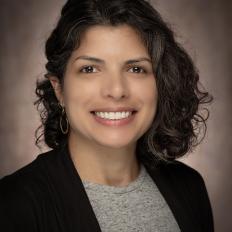
While neither one of us had previously worked directly in the energy justice space, our backgrounds and interests certainly align with EJE’s work. Monika is a toxicologist who has studied how chemicals of concern impact populations, and which populations are disproportionately exposed. She also spent several years as a postdoc working on chemical policy frameworks to better protect marginalized communities. Colleen is an environmental geochemist and faculty member at Youngstown State University where she researches the legacy of historic pollution and more recent contamination impacts of train wrecks and microplastics in aquatic ecosystems.
To get up to speed on energy justice, we immersed ourselves in understanding different energy technologies and the projects taking place in the river parishes.
The river parishes in Louisiana–part of “Cancer Alley”–are the southeastern parishes of the state where the Mississippi River borders or runs through them. Due to their proximity to the river, these parishes also contain some of the largest concentrations of petrochemical refineries and chemical manufacturing facilities in the United States. It is also where populations experience some of the highest cancer rates in the country. These populations and their community groups call attention to the myriad of environmental injustices in the region. While the petrochemical facilities have long employed local residents and made investments in communities, the overall populations in the river parishes live in higher poverty (upwards of 50% for Black women in St. James Parish) compared to the national average of 12.6%. Communities in the river parishes also experience amplified vulnerabilities to climate change, extreme weather events, and saltwater intrusion up the Mississippi River, which threatens to limit freshwater availability.
For us, as new fellows, it was absolutely electrifying to work so closely with Energy Secretary Jennifer M. Granholm’s team, the Under Secretary of Infrastructure David Crane, the directors of five other DOE offices, as well as with community partners co-hosting the event, including RISE St. James, Concerned Citizens of St. John, Together Louisiana, Sierra Club Delta Chapter, Healthy Gulf, and New Wine Christian Fellowship in LaPlace, LA, where the event was held. The beginning events of the day included a ribbon-cutting to celebrate the opening of the largest solar microgrid in South Louisiana–a “community lighthouse”.
Community lighthouses are intended to provide solar power and back up energy in the aftermath of long-term storm related outages. DOE’s Grid Resilience and Innovation Partnerships (GRIP) Program is investing $3.5 billion across southern states to stand up 400 microgrids, many of which will be in Louisiana. The importance of community lighthouses was especially underscored by Cynthia Coleman from Together Louisiana, who shared that she lost three family members in the aftermath of Hurricane Ida from carbon monoxide poisoning due to running a generator for air conditioning when the power was out for an extended period.

Secretary Granholm and members of the DOE delegation spent several hours driving through some of the river parishes. guided by community members. Stops were made at different points to discuss environmental injustices and community concerns, as well as to see the reality of fenceline and frontline communities. Community members spoke about alarms from industries, evacuations, poor air quality, and a prevalence of respiratory illnesses – all environmental justice issues that must not be exacerbated by the regional energy investments going forward.
While the driving visit took place, we helped facilitate a Community Benefits Plans (CBP) workshop for both community members and companies to learn about the goals of CBPs and the processes around creating and strengthening them. CBPs are a way to inform projects, build accountability with companies, and negotiate benefits for their communities. CBPs are now required for many DOE funding applications, where they are evaluated and scored as part of the application and then integrated into the award as part of the work that must be carried out by the awardee.
The last part of the day included a listening session for community members to voice their experiences with industrial activities in the region as well as their concerns about future energy projects. Community members emphasized the importance of tracking pollution data, creating quality union-wage jobs, addressing regressing coastlines, increasing apprenticeships and training, and collaborating with other federal agencies to address environmental justice issues, listened to by Secretary Granholm.
In the next session, Secretary Granholm was joined by EJE Office Director Shalanda Baker, where they convened a roundtable of industry executives from the area engaged with the CBP process. This pushed roundtable participants to go further into aspects of their CBP approach or plan, particularly related to planned community benefits. Feedback from both audience members and industry roundtable participants noted the appreciation for the engagement, productive conversations, and the need for further CBP educational workshop activities to continue discussions and ensure that CBPs are developed with community involvement.

Overall, this roadshow event was incredibly important for the engagement of community groups, concerned citizens, local elected officials, and industries engaged in DOE awards, as the river parishes are impacted by climate change and energy projects. Both of us followed the advocacy work of some of these organizations for years and were so humbled that we were able to interact with them and play a role in facilitating a productive discussion space. The roadshow events were so impactful that they were recognized at DOE with a Secretary’s Achievement Award. To receive this award as part of the team coordinating the event was also a huge honor.
Over the last few months since the roadshow event, our office has been busy following up on recommendations and discussions from the roadshow as well as from other engagements, launching the Regional Energy Democracy Initiative (REDI), to be piloted in the Gulf South. The initiative “is designed to provide capacity building and technical assistance for communities in the region”, including supporting communities in participating in the CBP process. At other venues and events, we’ve been co-facilitating the CBP workshop that was piloted during the Roadshow, and it recently received a Creative Commons license and is now available for any community to freely download. We are excited to continue supporting efforts like this during the rest of our fellowship!

Images: Monika Roy and Colleen McLean | Unsplash
Disclaimer
This blog does not necessarily reflect the views of AAAS, its Council, Board of Directors, officers, or members. AAAS is not responsible for the accuracy of this material. AAAS has made this material available as a public service, but this does not constitute endorsement by the association.
Authors