PODCAST | AAAS 2018 Live: Forest Canopy, Non-Traditional Researchers & More

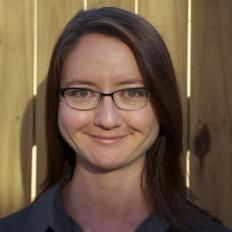
In this episode Dr. Holly Summers, a plant biologist and current AAAS Science and Technology Policy Fellow at the US Department of Agriculture, speaks with Dr. Nalini Nadkarni, an ecologist at the University of Utah. Dr. Nadkarni begins with the story of how she became interested in the forest canopy, and the delicate nature and importance of the canopy to a healthy tropical forest. They also discuss how her work has helped to inspire and develop non-traditional community outreach programs working with prison inmates, allowing inmates to contribute to the scientific process through meticulous restoration work involving plant and animal life. Last and probably most unexpectedly, Dr. Nadkarni describes how she got inspired to launch a line of clothing that features botanically correct images of nature.
Participants
Host: Holly Summers, Ph.D., Plant Biology2017-2018Executive Branch Fellow at the USDA
Nalini Nadkarni, Ph.D., Ecology; Professor of Biology, University of Utah
Executive Producer
Carlos Faraco, Ph.D., Neuroscience2016-2018 Executive Branch Fellow at the National Institutes of Justice
Image: Sybil Gotsch
Disclaimer
This blog does not necessarily reflect the views of AAAS, its Council, Board of Directors, officers, or members. AAAS is not responsible for the accuracy of this material. AAAS has made this material available as a public service, but this does not constitute endorsement by the association.
Authors