Podcast

PODCAST | Learning to See Science in the World: A Conversation with Dr. Melanie Peffer

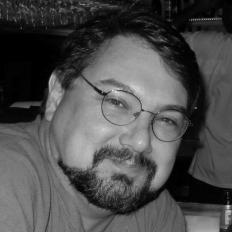
Chris Parsons
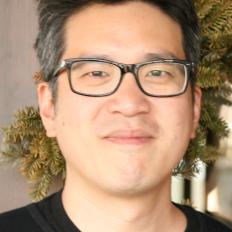
Philip Ko
Photo of the book “Biology Everywhere: How the Science of Life Matters to Everyday Life,” by Dr. Melanie Peffer.

Dr. Melanie Peffer is the author of “Biology Everywhere: How the Science of Life Matters to Everyday Life,” a book that reveals how biological concepts taught in the classroom are connected to the world around us. In this episode, we discuss key concepts from the book including changes to the way science is taught, how creative processes are used in scientific work, and understanding how scientific knowledge is acquired. We also talk about engaging with non-scientific audiences even when they adopt anti-scientific points of view, and how COVID-19 has revealed the way that scientific work and knowledge evolves to the public. Learn more about her book, educational engagement, and research at: https://www.biologyeverywhere.com.

Participants 

Host: Philip Ko, Ph.D., 2019-20 Executive Branch Fellow, National Science Foundation; @PhilKo19 on Twitter

Guest: Melanie Peffer, Ph.D.; @Melanie_Peffer on Twitter

Producers 

Producer: Chris Parsons, Ph.D., 2020-21 Executive Branch Fellow, National Science Foundation; @EcmParsons on Twitter

Executive Producer: Phil Ko, Ph.D., 2019-20 Executive Branch Fellow, National Science Foundation; @PhilKo19 on Twitter

Editor: Ashley Scarlett, Ph.D.; @DrScarlettSmash on Twitter

Disclaimer

This blog does not necessarily reflect the views of AAAS, its Council, Board of Directors, officers, or members. AAAS is not responsible for the accuracy of this material. AAAS has made this material available as a public service, but this does not constitute endorsement by the association.

Tags

Science Communication
COVID-19
Podcast

Share this article

Authors

Chris Parsons

Parsons, Chris: Fellowship 2020-2021 Parsons, Chris: Fellowship 2021-2022

Dr. Chris Parsons has been involved in whale and dolphin research for over two decades and has been involved in projects on every continent. Dr. Parsons is currently a communications and analysis specialist for the Oceans Division of the National Science Foundation and an AAAS Science and Technology Policy Fellow. 

Before that he was a consultant for a number of environmental groups in Washington DC, consulting on marine wildlife, conservation and science communication and policy issues. He was also an Associate Professor in the Department of Environmental Science & Policy at George Mason University , in addition to being the Director of their undergraduate program in environmental science.

He’s a member of the scientific committee of the International Whaling Commission (IWC), has been involved in organizing four of the International Marine Conservation Congresses (IMCC) (the world’s largest academic marine conservation conference) and two of the International Congresses for Conservation Biology. He was a Governor of the Society for Conservation Biology (SCB) for nearly a decade and also served two terms as the president of the SCB Marine Section and was on the Board of Directors of the American Cetacean Society as their Conservation Chair. He is currently on the Board of Directors of both the Society for Marine Mammalogy and the SCB Conservation Marketing & Engagement Working Group.

​In addition, Dr. Parsons has published over 170 scientific papers and book chapters and has written a textbook on marine mammal biology & conservation and co-edited a book on marine wildlife conflict resolution.

Philip Ko

Ko, Philip: Fellowship 2019-2020 Ko, Philip: Fellowship 2020-2021

Phil Ko earned his Ph.D. in Psychology from Vanderbilt University for his research on visual memory, attention, and object representation. During his postdoctoral fellowship at Vanderbilt University Medical Center, he examined how visual memory systems change with age, dementia, and different states of awareness, using electroencephalographic and eye movement measurements. Dr. Ko is also an educator, both in the classroom and the community. He has held faculty positions at Vanderbilt University and Austin Peay State University, and has actively brought science to various community events in Nashville for children and the elderly. As a AAAS S&T Policy Fellow, he hopes to further learn how to bridge the scientific community and the public. Phil enjoys playing music in his spare time.