Taking Space to Learn from Failure


In 1999, NASA's aspirational $148 million Mars Polar Lander mission turned into the "Mars Polar Crasher" when it poorly judged its footing and lost control while descending to Mars’s surface. The accident devastated over 100 scientists and engineers who had devoted four years of development time to the project, and another year of waiting for the spacecraft to cruise through space. In the aftermath, NASA halted exploration of Mars' enticing icy poles, features that hold key records of the planet’s ancient climate cycles and past habitability.
I also know what it’s like to take a misstep and see years of planning hit the dust. One month before I was finally going to head into the Mojave Desert to collect experimental data for a multi-year, NASA-funded Mars analog geophysics project, I tore my right Achilles tendon. It also just happened to be right before I was supposed to go backpacking for a week in Washington State’s Olympic Mountains.
I was taking a hard backstep in a tennis match when it felt like something whacked me in the calf from behind. Then I collapsed to the ground, suddenly unable to wiggle my foot. In those moments keeled over on the tennis court, I realized that foot wiggling was probably a necessary skill for both backpacking in the Olympic Mountains and traversing the Mojave Desert. I could forgo backpacking, but I absolutely could not give up on fieldwork.

My research project had already been delayed by two years—first by another team member’s health scare and then by COVID-19 safety measures. After two years of delays, even before my injury, it might have been wise to pick a new project for my dissertation. One that didn’t involve the logistical complexity of field research; after all, the majority of NASA-funded Mars science can be done from a desktop computer by accessing data from the rovers and satellites at the Red Planet itself.
However, the project that NASA selected me to carry out specifically required the natural desert field environment to simulate the moisture dynamics and grain properties of Martian regolith (like soil, but on Mars). Also, to put it plainly, I like working outside. The hands-on connection with nature built from field study not only informs my intuition for physical processes but also motivates me to do science in the first place. I did not want to let that go.

It took ankle surgery and two months before I could walk again and three months before I could drive. But, three weeks after my Achilles surgery, I bought an "all-terrain" knee scooter – basically a knobby-tired tricycle. It wasn't perfect, but it worked well enough for me to supervise instrument deployment at a dry lake bed outside Pahrump, Nevada and to keep on track with my field plan. Like many-a-NASA-mission, my persistence ultimately paid off despite setbacks along the way.

The Mars Polar Lander wasn't alone in its failure—its partner mission, Mars Climate Orbiter, also went down in flames after a simple error in imperial-to-metric unit conversion. The ride-along Deep Space 2 probes, meant to record geophysical properties of the surface, similarly failed to phone home after impacting Mars. The trio of missions that made up the Mars Surveyor '98 project went 0 for 3.
There’s a cliche in mission work that “space is hard.” Engineers must plan for extreme temperatures, hostile radiation environments, vigorous vibrations, radio communication challenges, and precise three dimensional maneuvering capabilities. And that’s just what’s needed to leave the Earth’s atmosphere. Soft-landing science instruments on the surface of Mars requires an enormous set of additional engineering challenges. Seemingly minute issues can spell disaster for the entire mission—sometimes spectacularly, as in the case of Mars Surveyor '98, but also sometimes subtly, as with the recent Moon mission Lunar Trailblazer, whose solar panels were simply oriented the wrong way causing a fatal battery drain.
Yet, despite the immense complexity of missions that can make the odds of success seem exceedingly low, NASA-funded engineers and planetary scientists persist in their pursuit of exploring the great beyond. Ad astra per aspera, or “to the stars through hardship” is a guiding Latin slogan printed in the halls of NASA’s Kennedy Space Center. Without this mentality, and without institutionalized mechanisms for learning from failure, NASA likely would have dissipated in its earliest years when failure was the norm. For example, eight of the nine Pioneer probes launched to the Moon between 1958-1960 never collected Lunar data, but NASA still managed to place Humans on the moon in 1969. Consequently, Mars exploration would not end with Mars Polar Lander.
With a perseverance mindset, I charged ahead in my research, and in life, as stubborn as I was ambitious. A year after my Achilles injury, I had new goals in my sights: my dissertation defense in the following semester, and a much-anticipated field campaign to Iceland to take place right after. But on a New Years Day ski outing, I was eager to make the most of one of the biggest powder days Lake Tahoe had seen in over a decade by charging through forested glades and down steep cliffs. Then, on my fateful last run of the day, I poorly judged a jump and came crashing down on a patch of ice, tearing the anterior cruciate ligament in my left knee.
I needed another surgery, and I anxiously asked my orthopedist if I would be strong enough to carry equipment over Iceland’s boulders and glaciers by summertime. As an athlete, in addition to a scientist, it was devastating to lose my outlet for burning off steam during the intense period of work at the end of my PhD when I needed it most. I wanted to get back to my routine as quickly as possible, but this time the math wouldn’t work out. I had to call Iceland off; and after weeks of angst, I had to find a new modus operandi for completing my dissertation. Perhaps NASA mission management offered another insight here, beyond steady persistence.
Rather than stubbornly charging ahead, the failure of the Mars Surveyor '98 missions led program managers to halt and reassess a would-be follow-on mission called Mars Surveyor 2001. That mission had already been downscoped to remove its planned Athena rovers due to cost overruns, and the new hiatus resulted in the planned lander being placed in storage.
In 2008, nearly a decade after the Mars Surveyor ‘98 failure, a new mission called Phoenix took the decommissioned 2001 lander out of indefinite storage, modified it, and ultimately landed it safely in Mars’ icy northern plains. There, it scooped up the first samples of ice on another planet, demonstrating definitively that some of the water which may have once made Mars habitable still remained, hidden in solid form beneath the surface.
Phoenix rose from the ashes of Mars Polar Lander following a new approach. It landed in Mars’ far North rather than the far South. It underwent a more rigorous testing protocol that swapped out several major engineering instruments leading to a more reliable landing. And its science instruments were designed to focus on more sophisticated ice compositional analysis and habitability rather than Mars Polar Lander’s solely climate-focused toolset. From this success comes some wisdom I myself could have used post Achilles injury. Phoenix was not a retry of Mars Polar Lander as much as it was an evolution.
My second injury in such a short period shifted my perspective. For years, I sustained an outcome-oriented research drive through careful planning and a rigid schedule of work and exercise. But, now I needed to find what being a scientist looked like in a world where I couldn't do intensive fieldwork or exercise like I did before. Through that trying process, I explored alternatives to fieldwork. I focused on building out a computational model by day, while doing physical therapy most evenings. I also took on more teaching and mentoring duties, which I came to really enjoy.
Now, I’ve put a pause on research entirely while I carry out my AAAS Pathways to Policy Fellowship at The Planetary Society. In this role, I get to support science at its societal foundation by advocating publicly and on Capitol Hill for space exploration and basic research. I am overjoyed that I have been able to do such varied, engaging, and impactful work in teaching and advocacy over the last couple of years. I would not have found this path had it not been for injuries.

One outcome of my new role is that I’ve gotten much more intimate with the practice of tracking space programs and their historical outcomes. As I’ve done so, similarities between mission planning, federally funded collaborations on the grandest scale, and individual scientists–the most basic unit of any mission–have emerged. That is because missions can be best understood in terms of what it means to carry out sound science as humans.
Years-long human projects tend to follow nonlinear trajectories that require both creative persistence and acceptance, intertwined in a careful balance. Persistence toward progress through the gauntlet of adversity and failures; acceptance that failure is a natural part of doing hard things – that’s what makes them hard. Moreover, failure provides opportunities for adaptation and reframing such that by the time the project is complete, or a milestone is met, the core objectives might have changed entirely. I didn't realize it while I was injured, but my struggle to adapt ambitious field goals through unexpected setbacks mirrors a tension that has shaped NASA missions for decades.
Steadfast goal setting is a double edged sword that both drives discovery and haunts failures. Only through constant adjustment and reassessment can we persist in this ongoing journey to uncover the story of us: where we came from, why we're here, and where we're going – in our individual lives and in the broader story of the cosmos. Among the charred metal remains of failed probes and landers lie secrets of the universe in patient stillness. They’ll wait as long as it takes us to find them.
Author
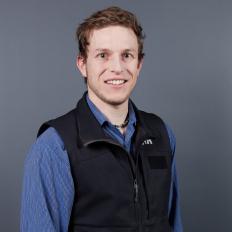
Ari Koeppel, Ph.D.
2025-2026 Pathways to Policy Fellow with the Planetary Society. As a PPF fellow at the Planetary Society, Ari conducts space science advocacy and policy research. As part of his fellowship, he has been writing a monthly blog separate from Sci On the Fly. To view other posts in that series, head to https://planetaryparadigms.wordpress.com.
Editors
Swati Narasimhan, Ph.D.
Sci on the Fly, Editor
2025-2026 Legislative Branch Fellow at the U.S. Senate
Evelyn Kimbrough, Ph.D.
Sci on the Fly, Editor
2024-2026 Executive Branch Fellow at the National Institutes of Health
Disclaimer
This blog does not necessarily reflect the views of AAAS, its Council, Board of Directors, officers, or members. AAAS is not responsible for the accuracy of this material. AAAS has made this material available as a public service, but this does not constitute endorsement by the association.
Authors