Podcast

PODCAST | Bridging the Gap: How Engaged Research Connects Science to Real-World Impact

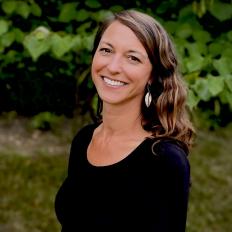
Constance Bolte
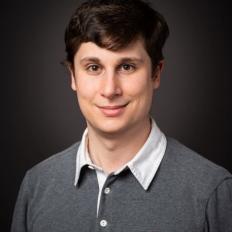
Mark Feuer DiTusa

In this episode of Sci on the Fly, host Connie Bolte, current Executive Branch Fellow at the National Science Foundation, speaks with STPF alum Dr. Angela Bednarek, who leads Pew Charitable Trusts' scientific advancement portfolio. Dr. Bednarek's AAAS STPF Fellowship at the U.S. Department of State revealed how researchers often failed to provide timely, relevant information to policymakers grappling with complex environmental issues. This experience led her to establish the Impact Funders Forum, a global collaborative that brings together funders across diverse fields to develop more effective strategies for supporting policy-relevant research.

The conversation explores "engaged research," a collaborative approach that involves stakeholders throughout the entire research process, from co-developing research questions to ongoing implementation. Dr. Bednarek emphasizes a fundamental shift in researcher mindset: moving from "how can my research help" to "what challenges do decision-makers face, and how can I design research to address those specific needs." While these approaches aren't entirely new, there is growing recognition of their necessity for tackling complex societal challenges in an increasingly interconnected world.


Host

Constance Bolte, Ph.D.;
2024-25 Executive Branch Fellow at the National Science Foundation
LinkedIn

Guest

Angela Bednarek, Ph.D.;
Director of Scientific Advancement at The Pew Charitable Trusts
2004-06 Executive Branch Fellow at the Department of State
LinkedIn

Producers

Constance Bolte, Ph.D.;
2024-25 Executive Branch Fellow at the National Science Foundation
LinkedIn

Mark Feuer DiTusa, Ph.D.; Physics
2024-25 AIP Congressional Fellow for Senator Chris Coons
LinkedIn


Disclaimer

This blog does not necessarily reflect the views of AAAS, its Council, Board of Directors, officers, or members. AAAS is not responsible for the accuracy of this material. AAAS has made this material available as a public service, but this does not constitute endorsement by the association.

Tags

Podcast
Funding
research

Share this article

Authors

Constance Bolte

Bolte, Constance: Fellowship 2024-2025 Bolte, Constance: Fellowship 2025-2026

Connie Bolte is a native Virginian who started her career as a science educator and the Director of Sustainability at the public high school level. She returned to graduate school to engage in scientific research related to plant ecology and evolution. A doctoral degree in Integrative Life Sciences was awarded to Connie from Virginia Commonwealth University in 2022. Connie then transitioned into a two-year Postdoctoral Scholar position at Penn State University within the College of Agriculture - Department of Ecosystem Science and Management. She is interested in policies and practices used to solve complex global change challenges and strategies that are (or could be) used to secure food, water, health, and access to education. Outside of work, Connie enjoys hiking, swimming, and family time.

Mark Feuer DiTusa

DiTusa, Mark: Fellowship 2023-2024 DiTusa, Mark: Fellowship 2024-2025 DiTusa, Mark: Fellowship 2025-2026 DiTusa, Mark: Fellowship 2026-2027

Dr. Mark Feuer DiTusa received his Ph.D. in Physics from the University of Chicago, where he studied the properties of plastic semiconductors to improve their electronic performance. Mark was a Christine Mirzayan fellow working for the Gulf Research Program's Board on Gulf Education and Engagement, and was most recently Chemistry & Engineering News's producer for their podcast Stereo Chemistry. He relishes being in interdisciplinary roles and situations that require the synthesis of multiple knowledge bases, whether between sciences or between science and another discipline. As someone who grew up in Baton Rouge, Louisiana, and attended Louisiana State University, he has seen firsthand how the energy industry impacts and shapes communities. He also believes strongly that science is for everyone, and that communicating and educating about science is critical to an informed citizenry. He hopes to utilize his wide breadth of scientific, communications, and policy knowledge to work improving the lives of Americans, particularly in clean technology, environmental justice, and scientific education.